-

Salome dancing – prints and glass
Salome, the name alone, conjures up images of an alluring young woman whose beguiling dance incited the beheading of John the Baptist. The narrative of Herod’s banquet appears in the New Testament, in the books of Mark and Matthew. Salome is not named in either book; the dancing girl is identified as ‘the daughter of… Read more
-
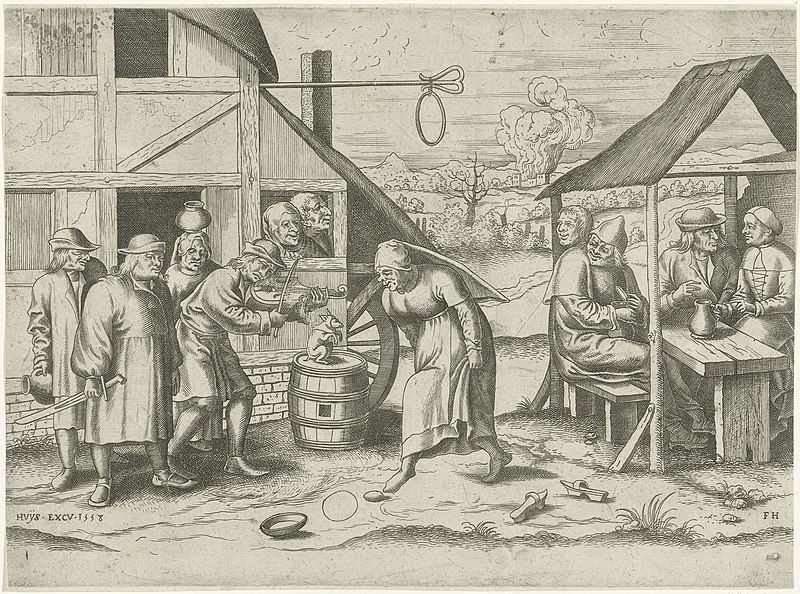
The Egg Dance – from tavern to tavern
A kissing couple, a monk fondling a tankard, a musician playing a vedel, a woman with a pot on her head, a kermesse and church procession all form the decor for Pieter Brueghel the Younger’s portrayal of an egg dancer. The Egg Dancer, from around 1620, shows, contrary to many other images of an egg… Read more
-
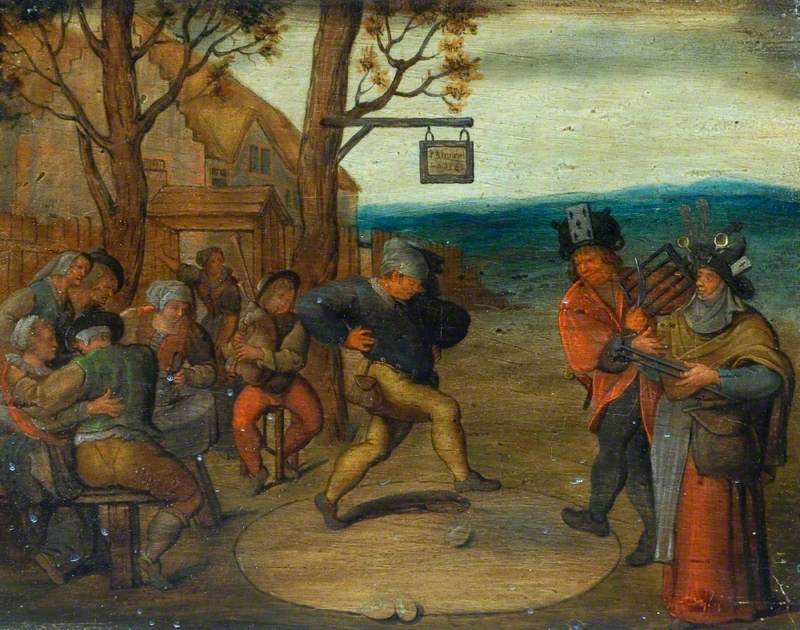
The Egg Dance – from moralistic to decorative
At approximately the same time as Pieter Aertsen painted The Egg Dance, the prolific Flemish artist Maerten de Vos (also written as Maarten or Marten) designed his own version of the egg dance. The drawing Egg dance outside a tavern is located in the Harvard Art Museum. This artwork, drawn in brown ink on cream… Read more
-
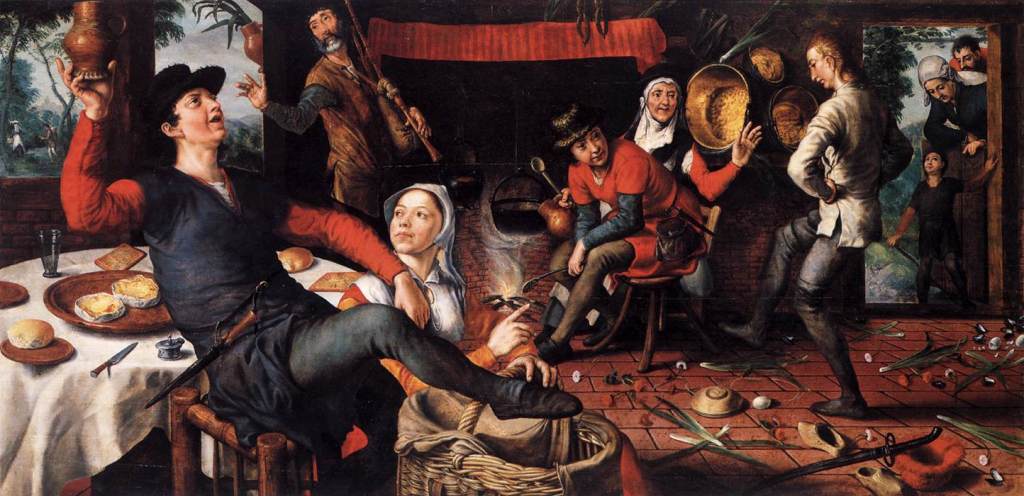
The Egg Dance – the skilful dancer
The origin of the Egg Dance goes back a long way. As early as 1498 an egg dance, more an egg dance competition, took place at the marriage festivities of Margaret of Austria and Philibert of Savoy. Apparently, after various couples had attempted the dance, breaking eggs in the process, the Duke of Savoy himself… Read more
-
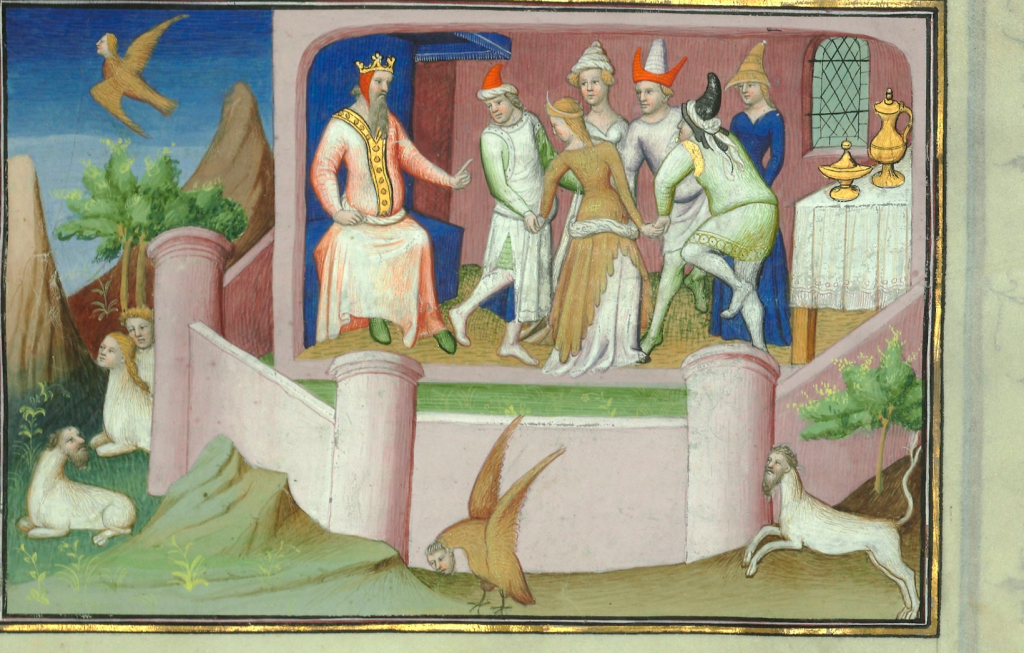
Circles, circles and more circles
In my previous post, I looked at images of the basse-danse in medieval manuscripts created during the Burgundian era. This post looks at some of the many images of circle dances illustrating secular manuscripts of the Low Countries during the same period. Circle dances have existed since the dawn of civilization; men and women, boys… Read more
-
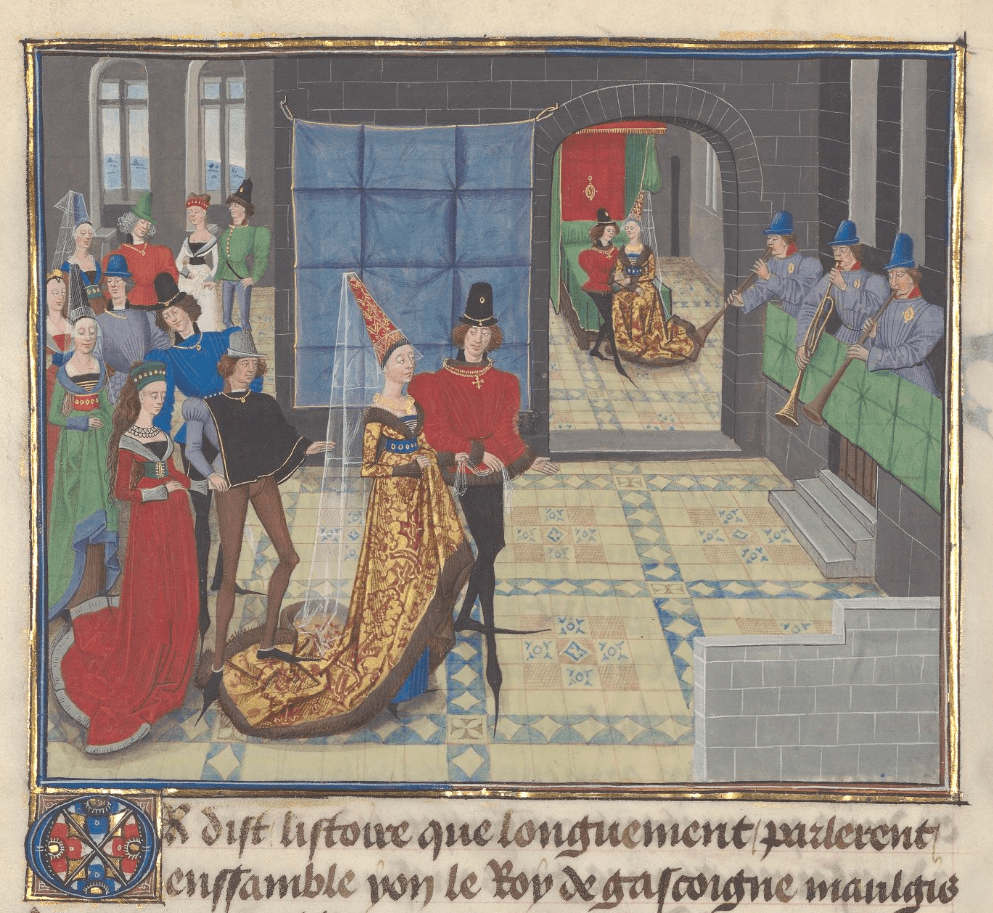
Dance at Court – The Basse-Danse
The court of Philip the Good, Duke of Burgundy is legendary. Not only were the palatial banquets, the stunning tournaments and the great pageants magnificent, but Philip the Good (1396-1467) was also a great patron of art and culture. Under his patronage the arts, including the art of the illuminated manuscript, thrived. The Duke was… Read more
14th century 15th century 16th century 17th century 18th century 19th century 20th century 21st century Adriaen Brouwer Adriaen Pietersz. van de Venne Adriaen van Ostade Albrecht Dürer Alma-Tadema art Arthurian Legends Bal des Ardents ballet Bergen School Bernard Picart Burgundian Court CoBrA Constant Cornelis Dusart Cornelis Massijs Crispijn de Passe the Elder dance Dance/Dancers Dance around the Golden Calf dancers David Ryckaert III David Teniers the Younger David Vinckboons De Stijl Egg dance Else Berg Erhard Schön Flemish Art Frans Francken II Frans Huysmans George Hendrik Breitner Gertrud Leistikow Gillis Mostaert Hans Bol Harmen Meurs Henri Braakensiek Herman Bieling Hieronymus Bosch Hieronymus Francken the Younger illuminated manuscript Isaac Israels Isaac van Ostade Jacob Grimmer Jacob Savery I Jacobus van Looy Jan Brueghel the Elder Jan Mandijn & followers Jan Miense Molenaer Jan Sierhuis Jan Sluijters Jan Steen Jean-Baptiste Vanmour Jean de Wavrin Jean Froissart Johan Dijkstra Karel Appel Karel van Mander Kees Maks Kees van Dongen Leo Gestel Loyset Liédet Lucas van Valckenborch Maarten van Heemskerck Maastricht Hours Maerten de Vos Marius Bauer Marten van Cleve Mommie Schwarz Paolo Fiammingo/Pauwels Franck Pieter Aertsen Pieter Balten/Peeter Baltens Pieter Bruegel the Elder Pieter Brueghel the Younger Pieter Codde Pieter de Bloot Pieter van der Borcht Pieter van der Heyden Piet Mondrian Piet van der Hem Romance of Alexander Roman de la Rose Rothschild Canticles Salome Sebald Beham Simon Bening Stallman Pim Tango Theo van Doesburg Vincent van Gogh Willem de Zwart Willy Sluiter
About me
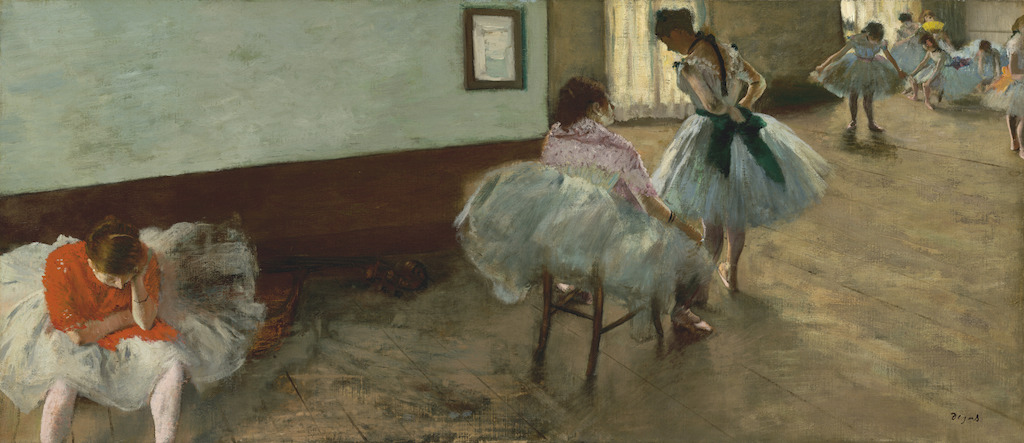
As a young aspiring dancer I loved to ponder over the magnificent paintings created by Edgar Degas. How his ballerinas inspired me. The atmosphere of the Paris Opera, the beautiful tutus and the hard working dancers never failed to trigger my imagination. As the years past, I retained my love of dance, of Degas, of art, and developed an interest in knowing more about the cross fertilization between art and dance.
 DANCE IMAGES IN THE ART OF THE NETHERLANDS