-
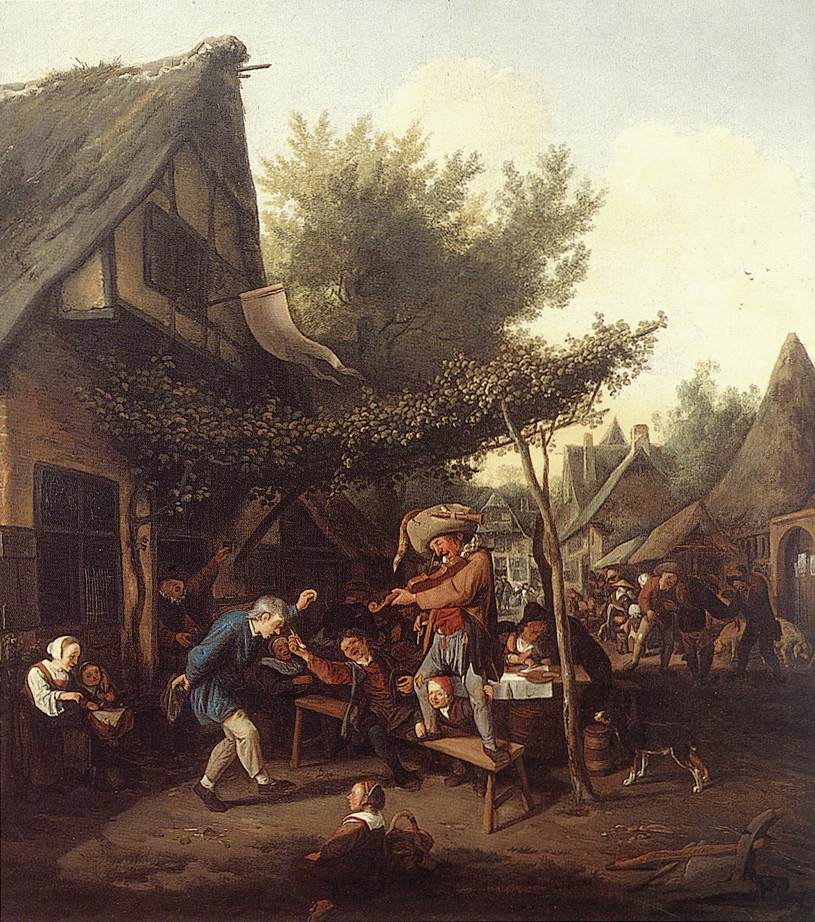
Dance Images after Adriaen van Ostade
Adriaen van Ostade, a distinguished artist who resided and worked in Haarlem his entire lifespan, was renowned for his depictions of genre scenes. He, as his peers, Adriaen Bouwer and Isaac van Ostade, painted rustics and commoners drinking, frolicking, flirting, smoking, fighting, making music, and dancing. The prolific Adriaen van Ostade was influential. He possibly… Read more
-
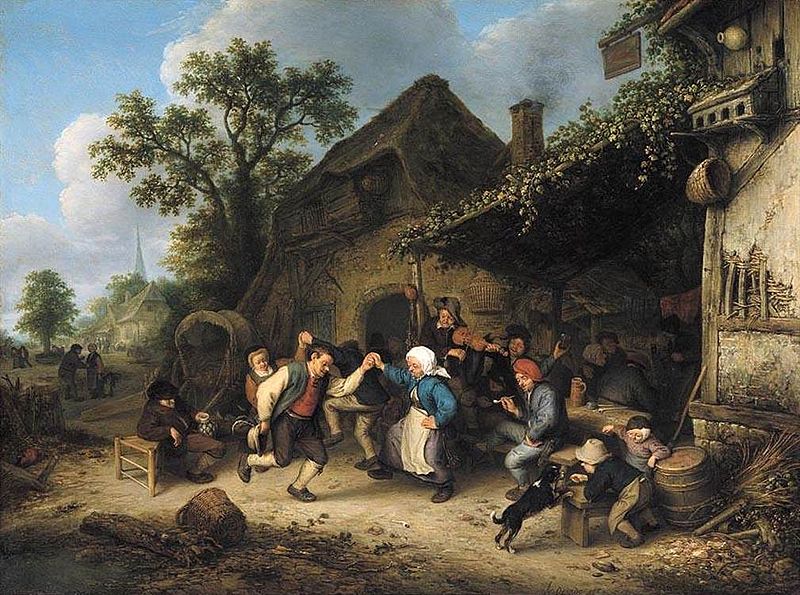
Adriaen van Ostade – master artist of rustic life
Adriaen van Ostade (1610-1685), a major artist of the Dutch Golden Age, was highly productive. Over eight hundred of his paintings are extant. He was also a renowned printmaker, second only to Rembrandt van Rijn. Van Ostade’s paintings and prints were in high demand. His early work, discussed in the previous post, depicts scraggy peasants in… Read more
-
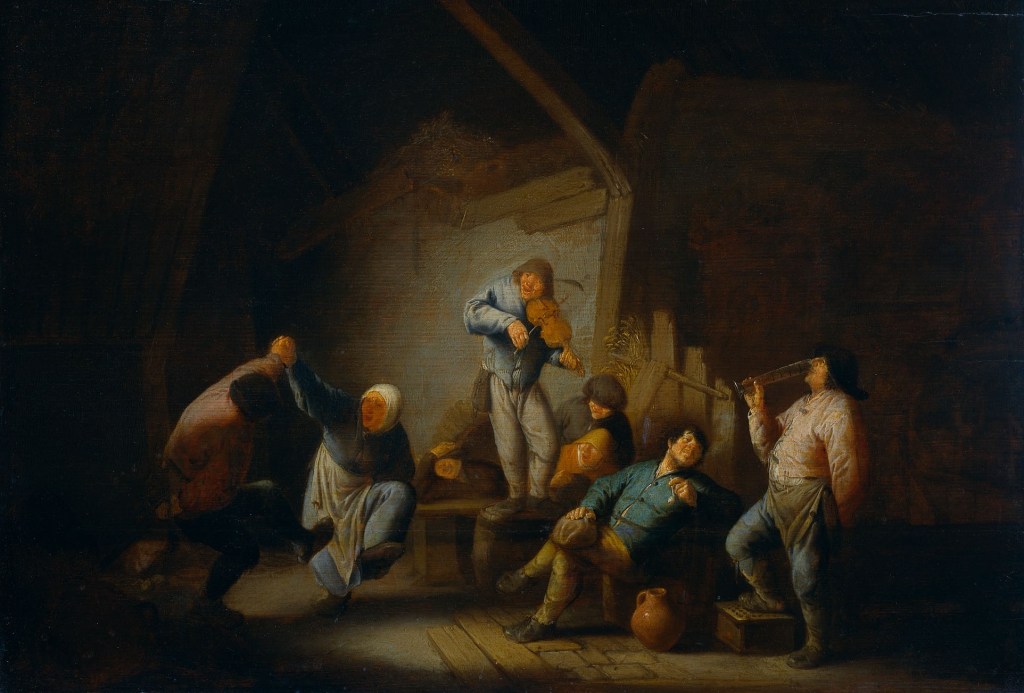
Adriaen van Ostade & Peers
During the 17th century, the city of Haarlem was bustling with activity. In a time of economic hardship and religious persecution, protestant Haarlem attracted many Flemish citizens. The Antwerp-born Frans Hals (1580-1666) arrived in Haarlem as an infant, trained as a painter, ultimately settling there permanently. Hals established himself as Haarlem’s most prominent artist and… Read more
-
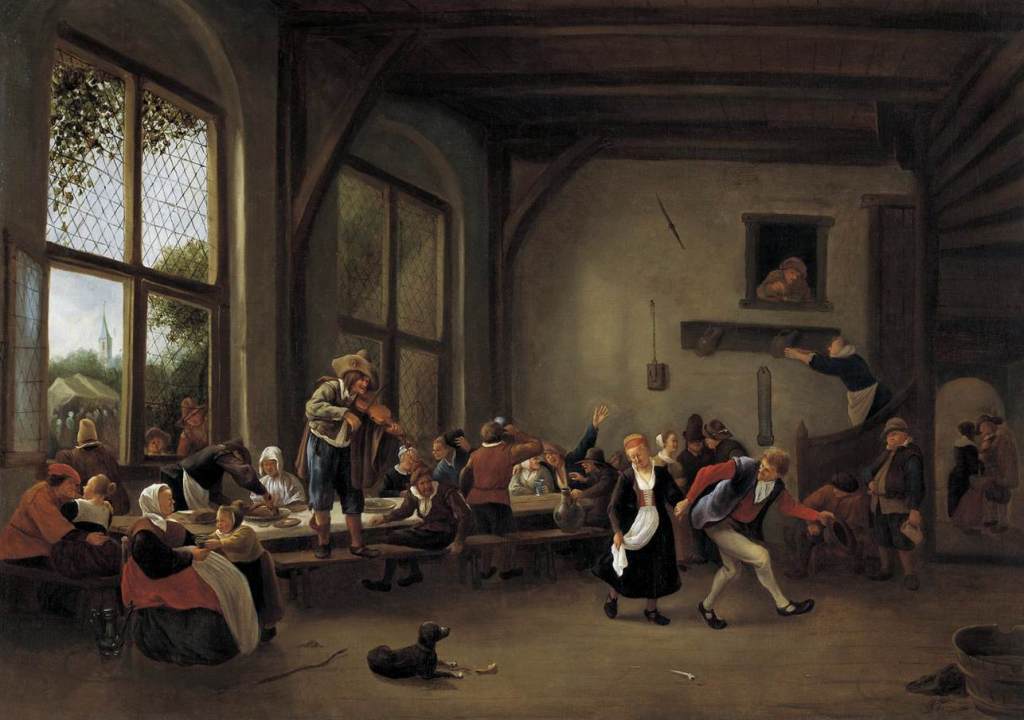
Jan Steen – Dancing in the Tavern
The tavern is crowded. Chaos abides. The floor is scattered with toys, vessels, drum sticks, a pipe, and much more. The bagpiper looks directly at the viewer, inviting all to enter the boisterous bedlam. Everywhere you look, there are delightful, intriguing, and questionable characters. There are a number of amorous couples caressing on the stairs.… Read more
-
Jan Steen – The Dancing Couple
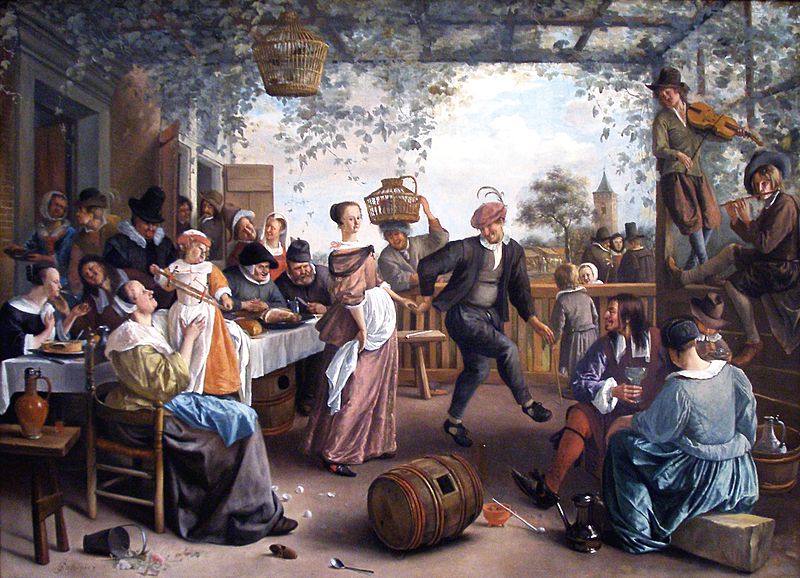
The Dancing Couple, a large painting by Jan Steen, never ceases to amaze. Steen transports his audience to a delightful festive scene in which young and old eat, drink, flirt, play, and make merry. A dancing couple immediately springs to the fore. The man is a boorish peasant. He wears rough garments and a silly… Read more
-
Jan Steen – Humour, Irony, or Empathy?
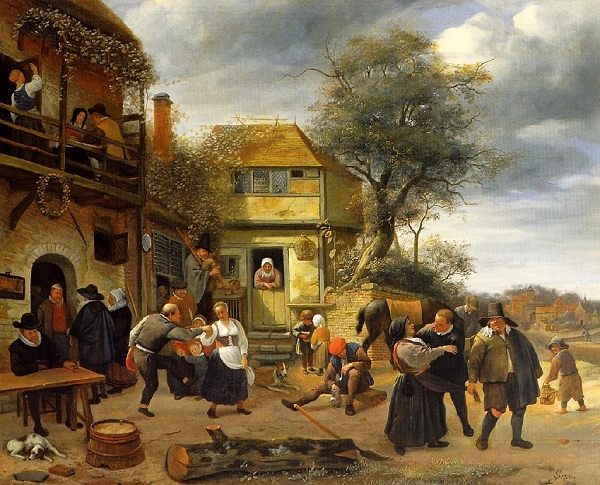
To this very day, the Dutch use the expression “Jan Steen household” to describe an untidy, rowdy home. Jan Steen (1626-1679) is a household name in The Netherlands. This Catholic artist, born into a well-to-do brewer family, is one of the most popular Dutch 17th-century artists. Four hundred of his paintings have survived. He painted… Read more
14th century 15th century 16th century 17th century 18th century 19th century 20th century 21st century Adriaen Brouwer Adriaen Pietersz. van de Venne Adriaen van Ostade Albrecht Dürer Alma-Tadema art Arthurian Legends Bal des Ardents ballet Bergen School Bernard Picart Burgundian Court CoBrA Constant Cornelis Dusart Cornelis Massijs Crispijn de Passe the Elder dance Dance/Dancers Dance around the Golden Calf dancers David Ryckaert III David Teniers the Younger David Vinckboons De Stijl Egg dance Else Berg Erhard Schön Flemish Art Frans Francken II Frans Huysmans George Hendrik Breitner Gertrud Leistikow Gillis Mostaert Hans Bol Harmen Meurs Henri Braakensiek Herman Bieling Hieronymus Bosch Hieronymus Francken the Younger illuminated manuscript Isaac Israels Isaac van Ostade Jacob Grimmer Jacob Savery I Jacobus van Looy Jan Brueghel the Elder Jan Mandijn & followers Jan Miense Molenaer Jan Sierhuis Jan Sluijters Jan Steen Jean-Baptiste Vanmour Jean de Wavrin Jean Froissart Johan Dijkstra Karel Appel Karel van Mander Kees Maks Kees van Dongen Leo Gestel Loyset Liédet Lucas van Valckenborch Maarten van Heemskerck Maastricht Hours Maerten de Vos Marius Bauer Marten van Cleve Mommie Schwarz Paolo Fiammingo/Pauwels Franck Pieter Aertsen Pieter Balten/Peeter Baltens Pieter Bruegel the Elder Pieter Brueghel the Younger Pieter Codde Pieter de Bloot Pieter van der Borcht Pieter van der Heyden Piet Mondrian Piet van der Hem Romance of Alexander Roman de la Rose Rothschild Canticles Salome Sebald Beham Simon Bening Stallman Pim Tango Theo van Doesburg Vincent van Gogh Willem de Zwart Willy Sluiter
About me
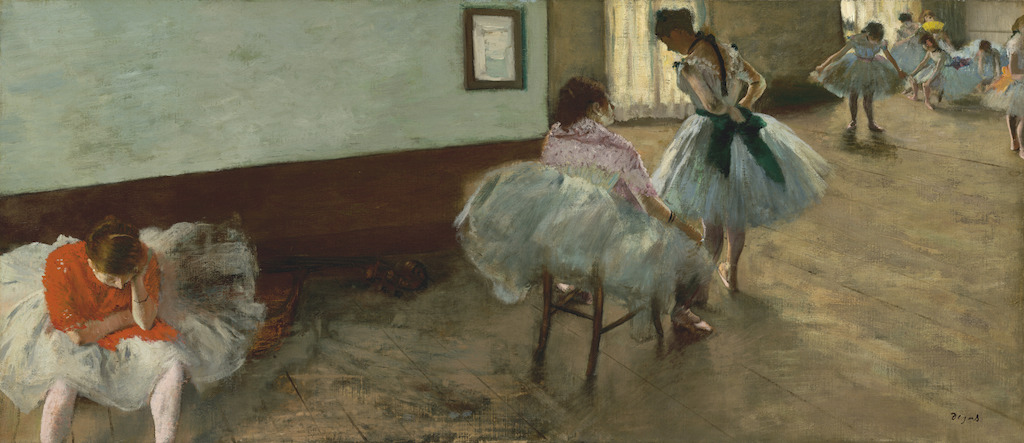
As a young aspiring dancer I loved to ponder over the magnificent paintings created by Edgar Degas. How his ballerinas inspired me. The atmosphere of the Paris Opera, the beautiful tutus and the hard working dancers never failed to trigger my imagination. As the years past, I retained my love of dance, of Degas, of art, and developed an interest in knowing more about the cross fertilization between art and dance.
 DANCE IMAGES IN THE ART OF THE NETHERLANDS