-

Miniatures – Nudes, Seduction, and Exaltation
In the miniature below, a nude lady is dancing cheerfully in front of a gold background embellished with three trees. Her arms are raised in enthusiasm as she and her red-dressed companion gaze intently at the unicorn. Why is the unicorn, which has a great smile of his face, so happy to see the nude… Read more
-
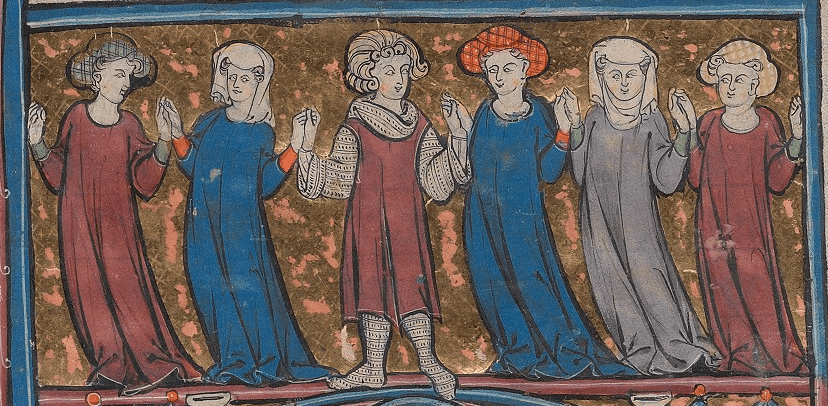
Miniatures – Lancelot and the Magic Carole
In my previous post, I discussed a number of miniatures of the medieval dance the carole, that appear in various versions of Le Roman de la Rose. In this post, I will look at the carole again; this time in Prose Lancelot. The term miniature can be confusing, therefore a few remarks before we start.… Read more
-
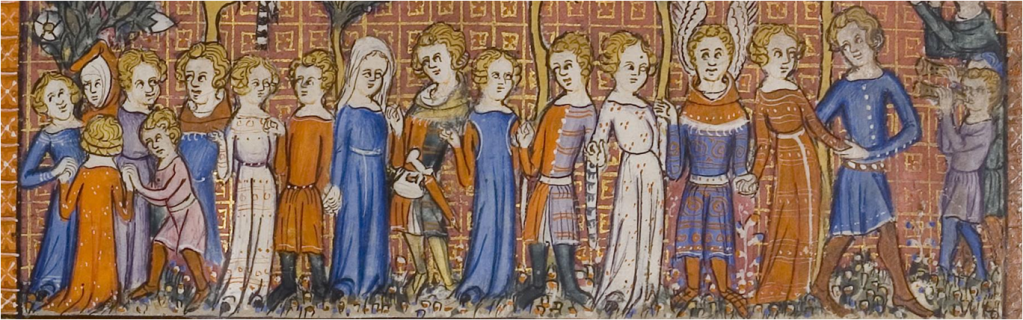
Le Roman de la Rose – The Carole in the Garden of Love
Le Roman de la Rose is without doubt the most celebrated secular manuscript of the late Middle-Ages retaining an overwhelming popularity over a period of a few hundred years. This allegory of courtly love, tells the tale of a poet who, having fallen asleep, dreams about his quest to win his ideal love, a beloved… Read more
-

Dance in the Margins – Romance of Alexander (2)
Secular manuscripts grew increasingly popular during the 14th century. Especially celebrated were the legends of Alexander the Great. The profusely illustrated, Romance of Alexander (MS Bodley 264) , written in the French vernacular and illustrated by the Flemish artist Jehan de Grise and his workshop between 1338 and 1344 is just one of the many… Read more
-

Dance in the Margins – Romance of Alexander (1)
The Romance of Alexander (Bodley 264) is a part historical, part fictional narrative about the life and adventures of Alexander the Great. This priceless manuscript is kept in the Bodleian Library, Oxford. We neither know who commissioned this manuscript nor the name of the original owner. The first seventy years of its existence are a… Read more
-
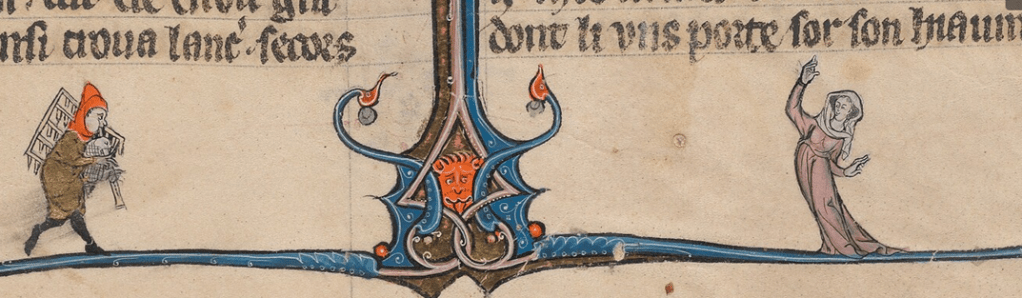
Dance in the Margins – The Arthurian Legends
In the high Middle-Ages the demand for manuscripts no longer primarily focused on religious or devotional books. Where initially manuscripts were the domain of monasteries with monks working laboriously in a scriptorium, by the 14th century urban workshops were producing manuscripts and selling these commercially. Books became accessible to a much wider audience. Increasing urbanization,… Read more
14th century 15th century 16th century 17th century 18th century 19th century 20th century 21st century Adriaen Brouwer Adriaen Pietersz. van de Venne Adriaen van Ostade Albrecht Dürer Alma-Tadema art Arthurian Legends Bal des Ardents ballet Bergen School Bernard Picart Burgundian Court CoBrA Constant Cornelis Dusart Cornelis Massijs Crispijn de Passe the Elder dance Dance/Dancers Dance around the Golden Calf dancers David Ryckaert III David Teniers the Younger David Vinckboons De Stijl Egg dance Else Berg Erhard Schön Flemish Art Frans Francken II Frans Huysmans George Hendrik Breitner Gertrud Leistikow Gillis Mostaert Hans Bol Harmen Meurs Henri Braakensiek Herman Bieling Hieronymus Bosch Hieronymus Francken the Younger illuminated manuscript Isaac Israels Isaac van Ostade Jacob Grimmer Jacob Savery I Jacobus van Looy Jan Brueghel the Elder Jan Mandijn & followers Jan Miense Molenaer Jan Sierhuis Jan Sluijters Jan Steen Jean-Baptiste Vanmour Jean de Wavrin Jean Froissart Johan Dijkstra Karel Appel Karel van Mander Kees Maks Kees van Dongen Leo Gestel Loyset Liédet Lucas van Valckenborch Maarten van Heemskerck Maastricht Hours Maerten de Vos Marius Bauer Marten van Cleve Mommie Schwarz Paolo Fiammingo/Pauwels Franck Pieter Aertsen Pieter Balten/Peeter Baltens Pieter Bruegel the Elder Pieter Brueghel the Younger Pieter Codde Pieter de Bloot Pieter van der Borcht Pieter van der Heyden Piet Mondrian Piet van der Hem Romance of Alexander Roman de la Rose Rothschild Canticles Salome Sebald Beham Simon Bening Stallman Pim Tango Theo van Doesburg Vincent van Gogh Willem de Zwart Willy Sluiter
About me
As a young aspiring dancer I loved to ponder over the magnificent paintings created by Edgar Degas. How his ballerinas inspired me. The atmosphere of the Paris Opera, the beautiful tutus and the hard working dancers never failed to trigger my imagination. As the years past, I retained my love of dance, of Degas, of art, and developed an interest in knowing more about the cross fertilization between art and dance.
 DANCE IMAGES IN THE ART OF THE NETHERLANDS