-
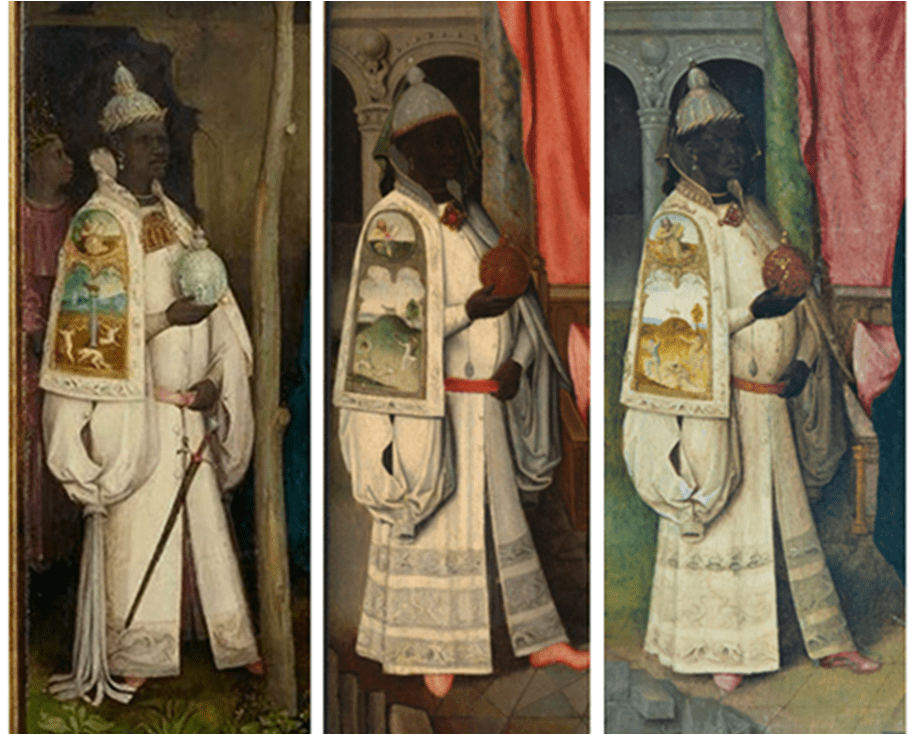
Hieronymus Bosch – The Dance around the Golden Calf
In the central panel of the triptych The Temptation of Saint Anthony, stands the ruins of a tower; the top tier shows the hand of God handing the Tablets of Law to Moses and immediately below are the most extraordinary dance figures in all of Bosch’s paintings. Bosch has painted, as if in low relief,… Read more
-
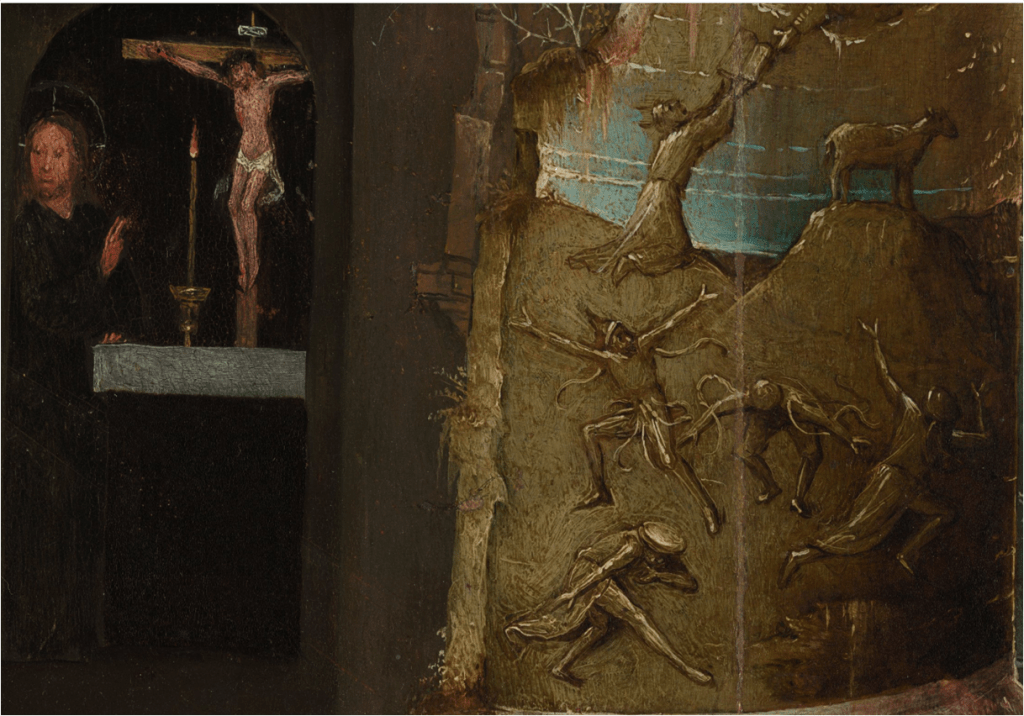
Hieronymus Bosch – Moresca
In the central panel of The Temptation of Saint Anthony, a triptych by Hieronymus Bosch stands the ruins of a tall tower. This tower is divided into four tiers; the top tier shows the hand of God handing the tablets, the Ten Commandments, to Moses and immediately there under are the most stunning dance figures… Read more
-
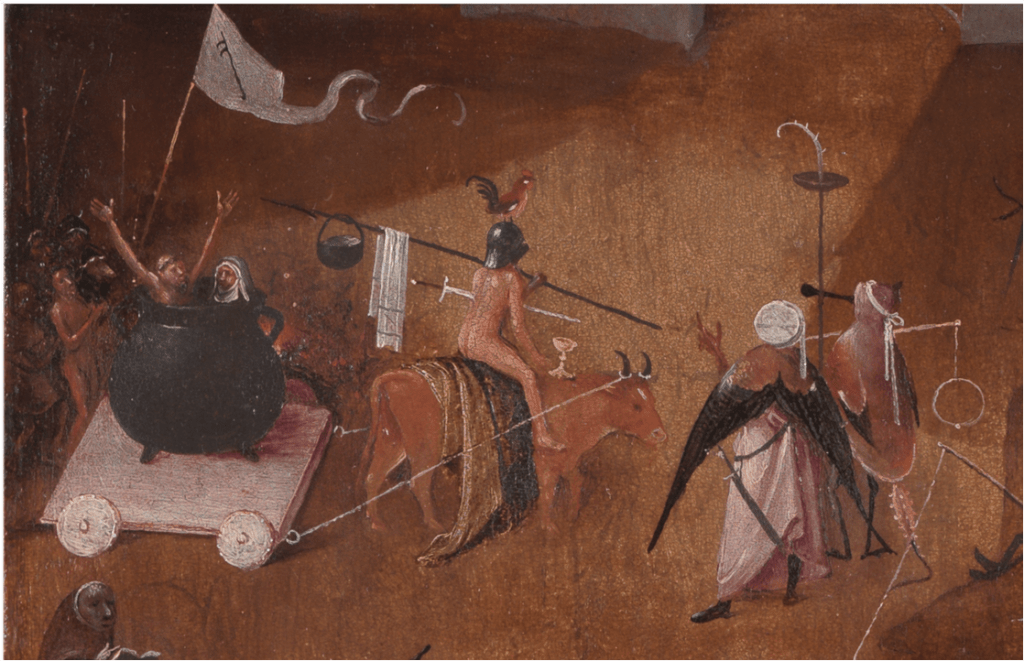
Hieronymus Bosch – The Dance of Death
On the right panel of The Haywain and the Bruges version of The Last Judgment a strange figure, a naked soul, rides on a bovine. Perhaps, if his helmet is any indication, this soul might once have been a soldier. A lance pierces diagonally through the torso of the rider. The excruciating pain seems not… Read more
-
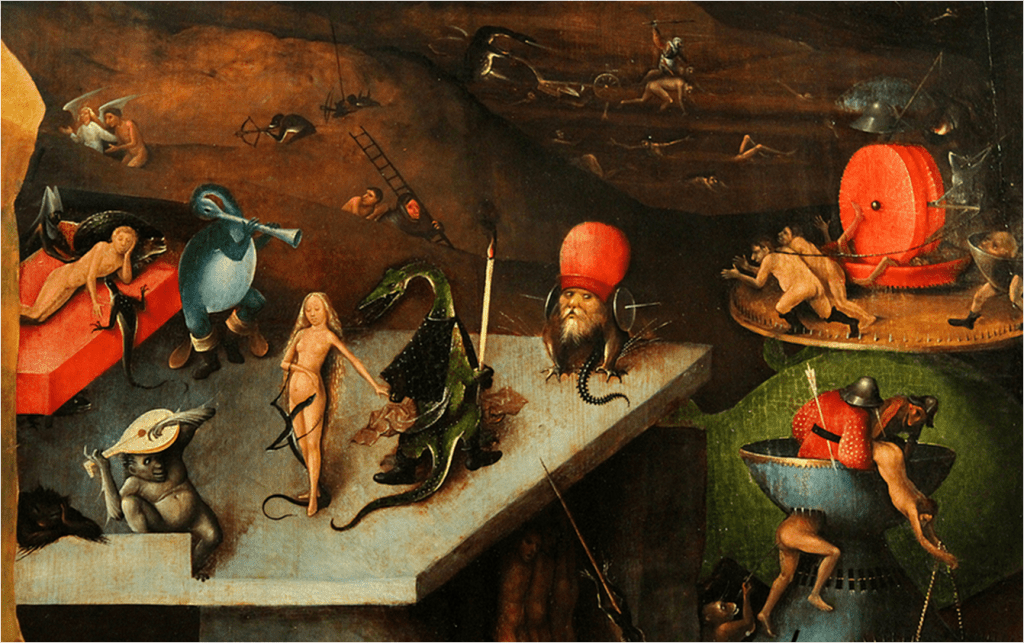
Hieronymus Bosch – Weird and Curious Dancers
Just imagine the scene. A naked woman, with a snakelike creature crawling rudely over her legs, parades elegantly down a runway while a dragon turns his atrocious head towards her. Behind her there is a head wearing a large red hat and in the front of her, a chunky ape-like creature is playing the lute.… Read more
-
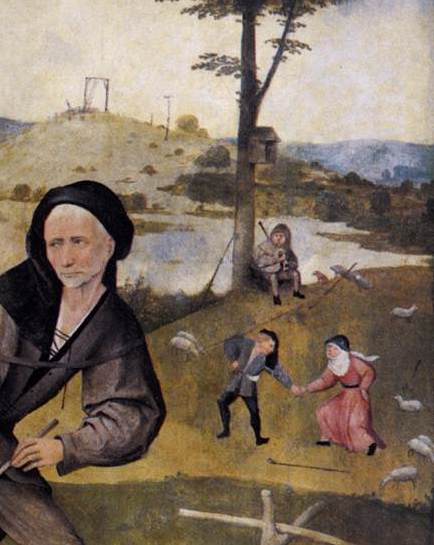
Hieronymus Bosch – Dancing Peasants
Paintings by the Dutch artist, Hieronymus Bosch send chills down your spine. Nightmarish scenes of eerie creatures, sinners suspended on enormous harps, nudes skating in hell, bodies mutilated with knives and spears, fire burning down entire towns, gigantic ears and a multitude of bizarre, baffling and inexplicable shapes all inhabit his canvases. There is an… Read more
-
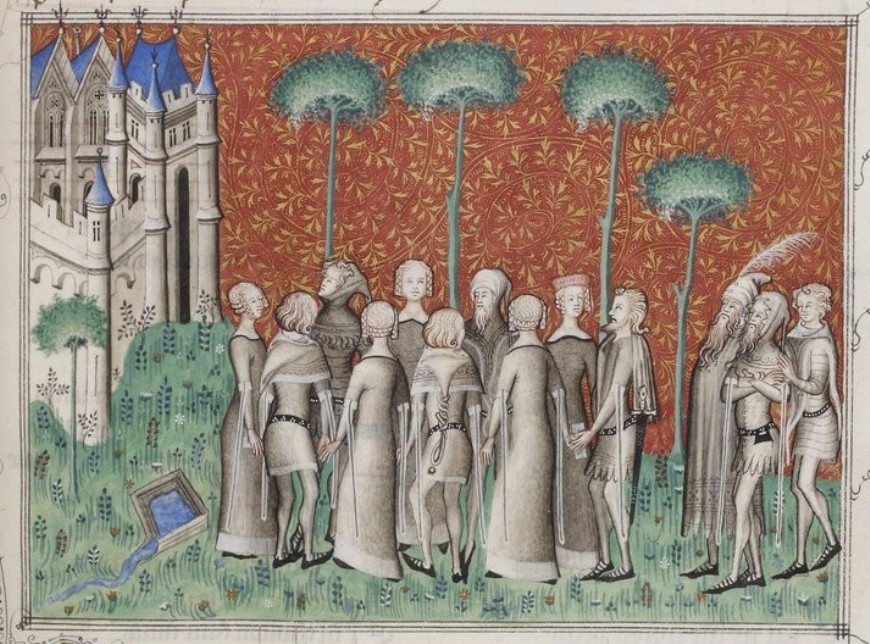
Poetry, Peacocks, Pheasants and Swans
Love teaches a young poet to compose music. He presents his song, a somewhat outdated lai, to his beloved. Not entirely content with his work and dissatisfied by his awkwardness, the poet flees and complains brazenly to Fortune. Fortuitously for him, Hope arrives and helps him to compose, a fashionable virelai to enchant his lady.… Read more
14th century 15th century 16th century 17th century 18th century 19th century 20th century 21st century Adriaen Brouwer Adriaen Pietersz. van de Venne Adriaen van Ostade Albrecht Dürer Alma-Tadema art Arthurian Legends Bal des Ardents ballet Bergen School Bernard Picart Burgundian Court CoBrA Constant Cornelis Dusart Cornelis Massijs Crispijn de Passe the Elder dance Dance/Dancers Dance around the Golden Calf dancers David Ryckaert III David Teniers the Younger David Vinckboons De Stijl Egg dance Else Berg Erhard Schön Flemish Art Frans Francken II Frans Huysmans George Hendrik Breitner Gertrud Leistikow Gillis Mostaert Hans Bol Harmen Meurs Henri Braakensiek Herman Bieling Hieronymus Bosch Hieronymus Francken the Younger illuminated manuscript Isaac Israels Isaac van Ostade Jacob Grimmer Jacob Savery I Jacobus van Looy Jan Brueghel the Elder Jan Mandijn & followers Jan Miense Molenaer Jan Sierhuis Jan Sluijters Jan Steen Jean-Baptiste Vanmour Jean de Wavrin Jean Froissart Johan Dijkstra Karel Appel Karel van Mander Kees Maks Kees van Dongen Leo Gestel Loyset Liédet Lucas van Valckenborch Maarten van Heemskerck Maastricht Hours Maerten de Vos Marius Bauer Marten van Cleve Mommie Schwarz Paolo Fiammingo/Pauwels Franck Pieter Aertsen Pieter Balten/Peeter Baltens Pieter Bruegel the Elder Pieter Brueghel the Younger Pieter Codde Pieter de Bloot Pieter van der Borcht Pieter van der Heyden Piet Mondrian Piet van der Hem Romance of Alexander Roman de la Rose Rothschild Canticles Salome Sebald Beham Simon Bening Stallman Pim Tango Theo van Doesburg Vincent van Gogh Willem de Zwart Willy Sluiter
About me
As a young aspiring dancer I loved to ponder over the magnificent paintings created by Edgar Degas. How his ballerinas inspired me. The atmosphere of the Paris Opera, the beautiful tutus and the hard working dancers never failed to trigger my imagination. As the years past, I retained my love of dance, of Degas, of art, and developed an interest in knowing more about the cross fertilization between art and dance.
 DANCE IMAGES IN THE ART OF THE NETHERLANDS