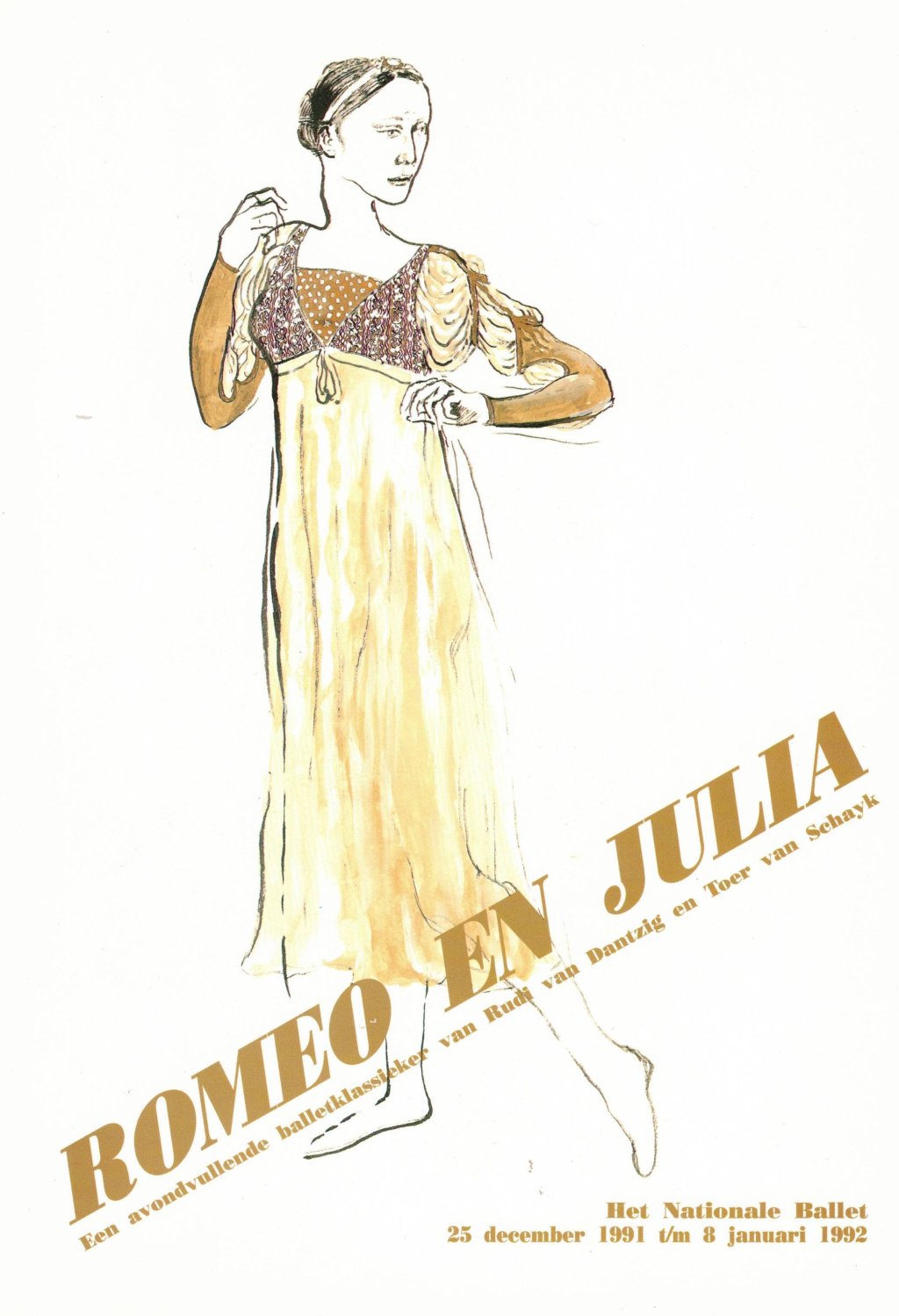
I cannot recall a Shakespearean play that has inspired more choreographers than Romeo and Juliet. The eternal love of Romeo and Juliet that flourishes despite the feud between the Montagues and the Capulets has consistently captured the imagination of creative artists. Long before Sergei Prokofiev composed the musical score (c. 1935), a version of Romeo and Juliet had been staged by Eusebio Luzzi (Venice 1785), Ivan Ivanovich Valberkh (St. Petersburg 1809), August Bournonville and Vincenzo Galeotti (Copenhagen 1811) and Bronislava Nijinska (Monte Carlo 1926), but the ballet’s international fame took flight when Leonid Lavrovsky created a large-scale Soviet production with Galina Ulanova and Konstantin Sergeyev in the leading roles (1940). In 1955, a filmed production starring Ulanova and Yuri Zhdanov introduced the Lavrovsky version to the West. The film, featuring the extraordinary Ulanova as Juliet, left audiences spellbound. The following year, the Bolshoi Ballet visited London, with Ulanova dancing Juliet on opening night. The performance was a triumph. Subsequently, John Cranko choreographed his version of the full-length ballet for La Scala Ballet (1958 with Carla Fracci as Juliet), revising this production for the Stuttgart Ballet (1962 with Marcia Haydée). A few years later Kenneth MacMillan presented his production for the Royal Ballet (1965). See footnotes (1)(2)
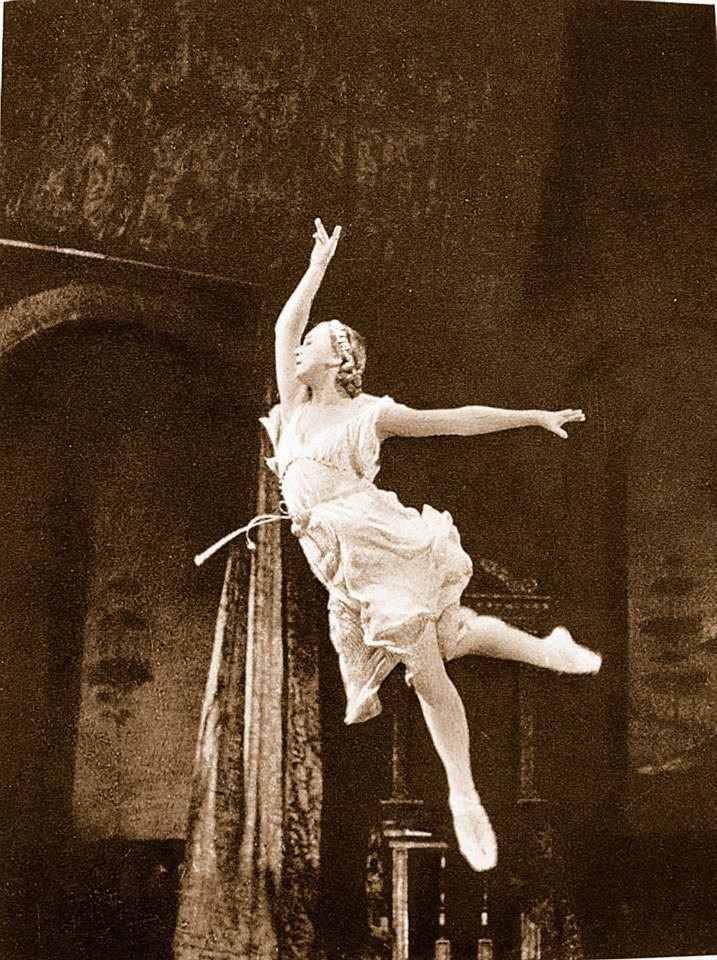
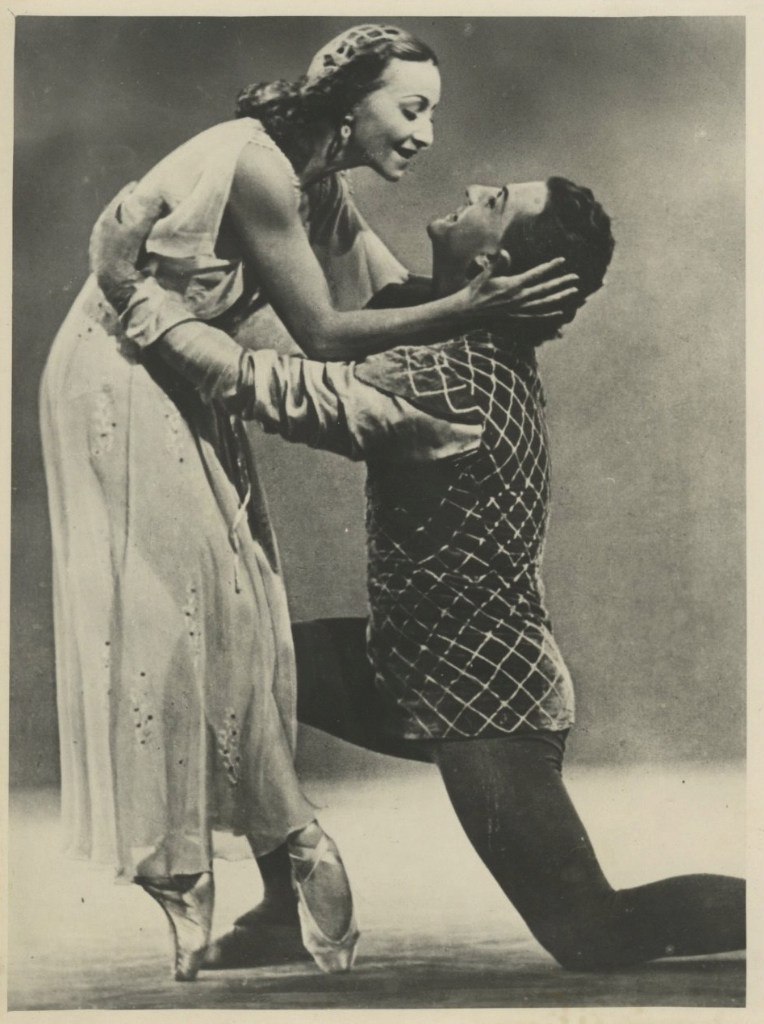
choreography Leonid Lavrovsky – composer Sergei Prokofiev – Bolshoi Ballet
premiẽre – Kirov Theatre of Opera and Ballet/Maryinsky Ballet 1940 (premiẽre Bolshoi Ballet 1946 – revived 1995)
Sonia Gaskell (1904-1974), artistic director of the Dutch National Ballet Company (Het Nationale Ballet), likewise inspired by Lavrovsky’s full-length ballet, sent her resident choreographer Rudi van Dantzig (1933-2012) to the Bolshoi Ballet to discuss the possibility of acquiring the ballet for the Amsterdam-based company. Van Dantzig, who had gained international recognition with his controversial choreography Monument for a Dead Boy (1965), vividly recalls the occasion. Lavrovsky, an exceptionally busy man, barely had time to speak to the Dutch choreographer. After days of roaming through the Bolshoi studios, Van Dantzig finally had an opportunity to speak to Lavrovsky, only to hear that the eminent choreographer refused his request. The dimensions of the theatre in Amsterdam, according to Lavrovsky, could not possibly accommodate his lavish production. On Van Dantzig’s return to the Netherlands, Gaskell suggested he approach Cranko and MacMillan in the hope of acquiring their choreography. They both declined his request.
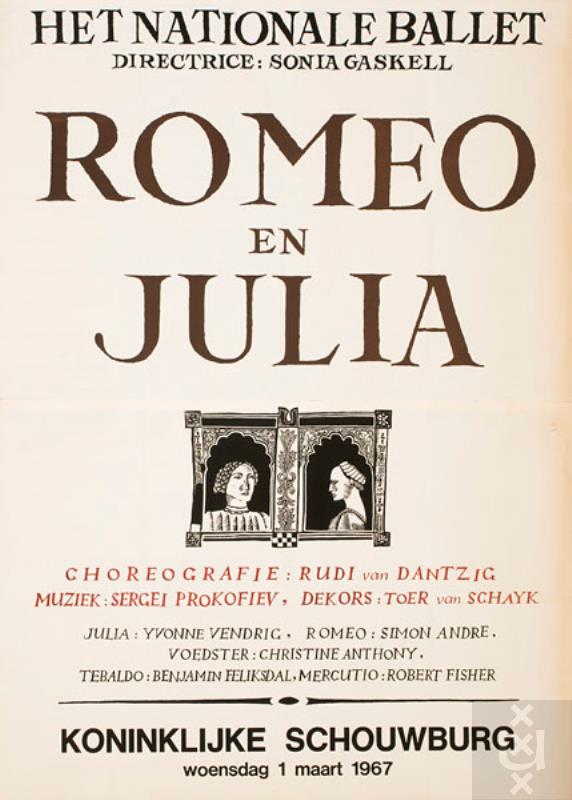
Gaskell was determined to secure a full-length production of Romeo and Juliet and assigned the monumental task to Rudi van Dantzig. That Van Dantzig was exclusively known for his contemporary work did not deter the artistic director. Van Dantzig was not only ushered into the world of traditional ballet, but he also became the first Dutch choreographer to create a full-length classical ballet. Romeo en Juliet, with Yvonne Vendrig and Simon André as the protagonists, premiered in 1967. (3)
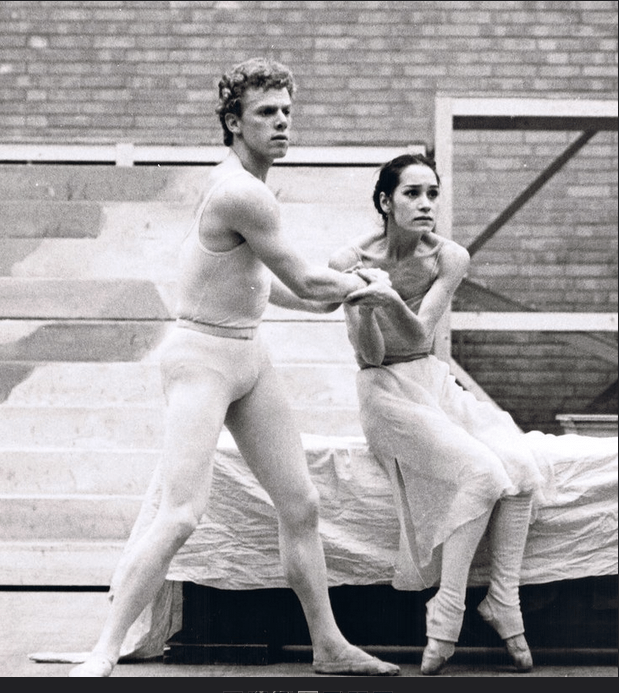
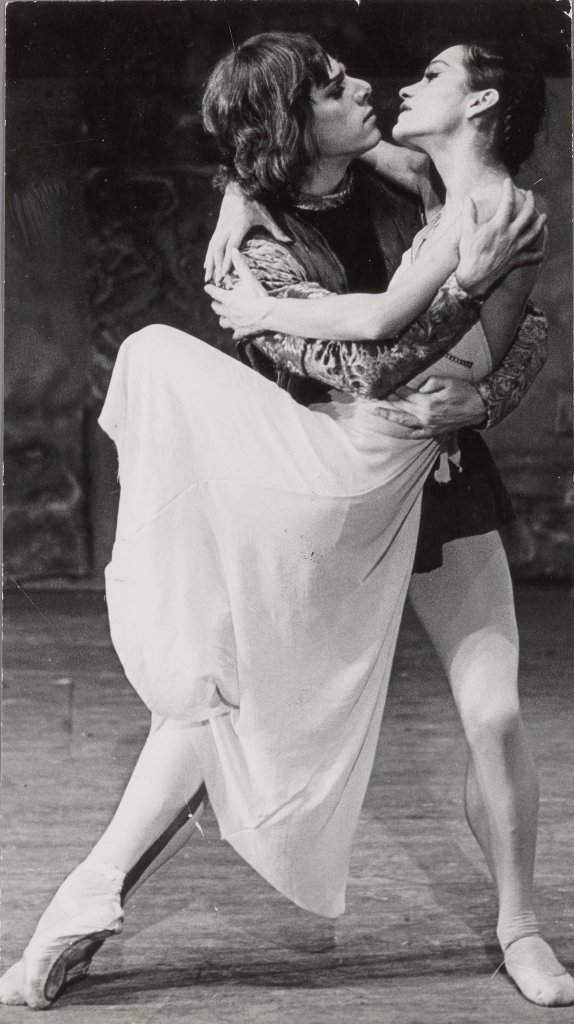
Choreography Rudi van Dantzig – Het Nationale Ballet/Dutch National Ballet – 1967
Left: Rehearsal – Yvonne Vendrig & Simon André – photographer not named
Right: Yvonne Vendrig and Simon André – photographer Ger J. van Leeuwen
Toer van Schayk, who created the principal role of The Boy in Monument for a Dead Boy, designed the costumes and sets for Shakespeare’s tragedy. His designs are inspired by early Italian Renaissance art. Never before, according to a number of critics, had a Dutch production seen such lavish costumes and decor. The audience and critics alike were impressed by the richness of colours, the intricate details, and the authentic setting. Van Schayk’s designs and backdrops seemed to make Renaissance artworks come alive. Nevertheless, the ballet received a mixed reception. Certain critics expressed their disappointment, claiming that Van Dantzig had abandoned his distinctive experimental style in favour of traditional academic (read Soviet) choreography. Others regarded Romeo and Juliet to be a landmark in the history of Dutch ballet, but not without mentioning that Van Dantzig was significantly influenced by Galina Ulanova’s interpretation of Juliet.
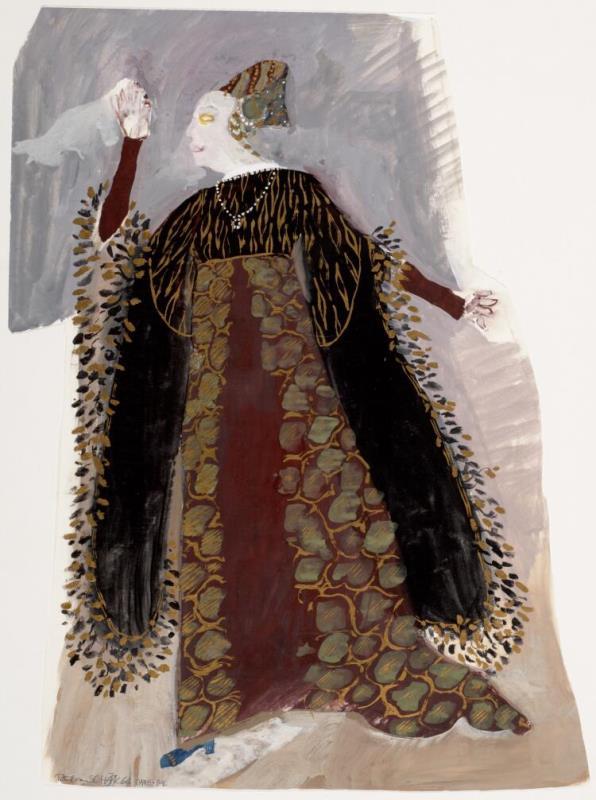
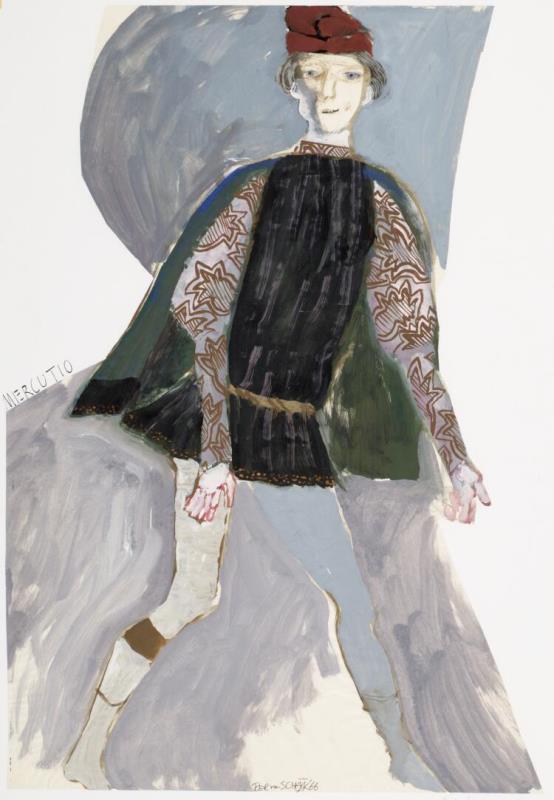
costumes designs for the 1967 production of ‘Romeo and Juliet’- Dutch National Ballet/ Het Nationale Ballet
Left : costume design for a lady – Capulet
Right: Costume design for Mercutio (originally danced by Robert Fisher)
Theater Instituut Nederland (TIN) – Allard Pierson Museum, Amsterdam
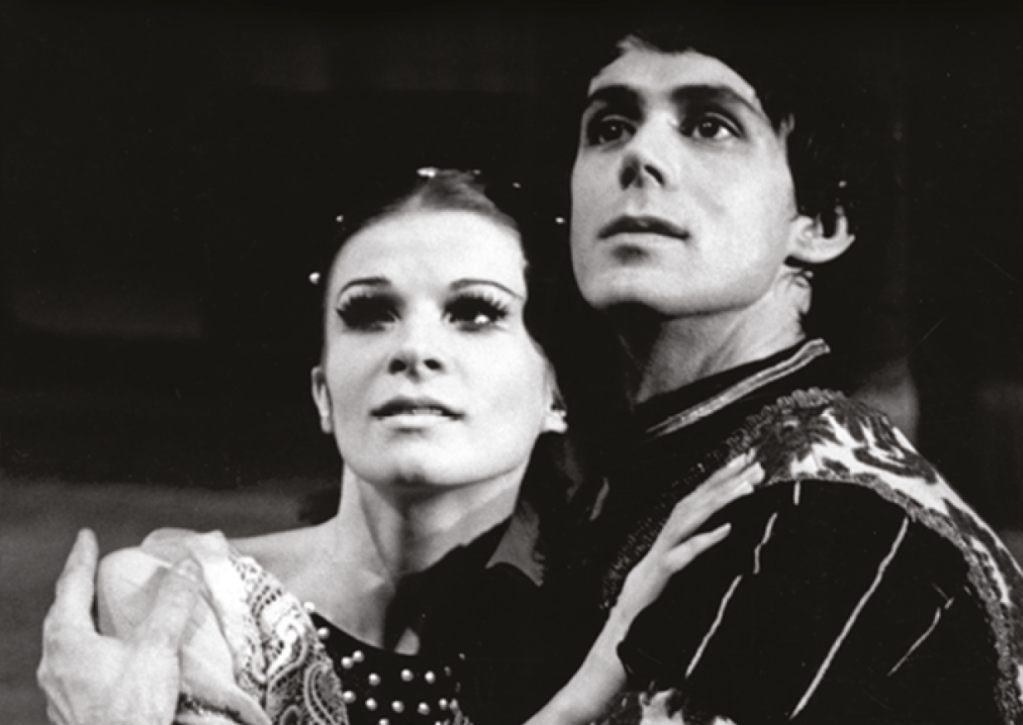
Toer van Schayk and Rudi van Dantzig formed an artistic partnership that endured for nearly five decades. Van Schayk designed the costumes and sets for many of Van Dantzig’s choreographies. And he often performed the leading role in the choreographer’s work. Yvonne Vendrig, the original Van Dantzig Juliet, remembers that even though Van Schayk was not a classically trained dancer, his portrayal of Romeo was emotionally moving and theatrically compelling. He also portrayed Tybalt, infusing the temperamental character with a sense of humanity and emotion. His portrayal of the Boy in Monument for a Dead Boy is legendary.
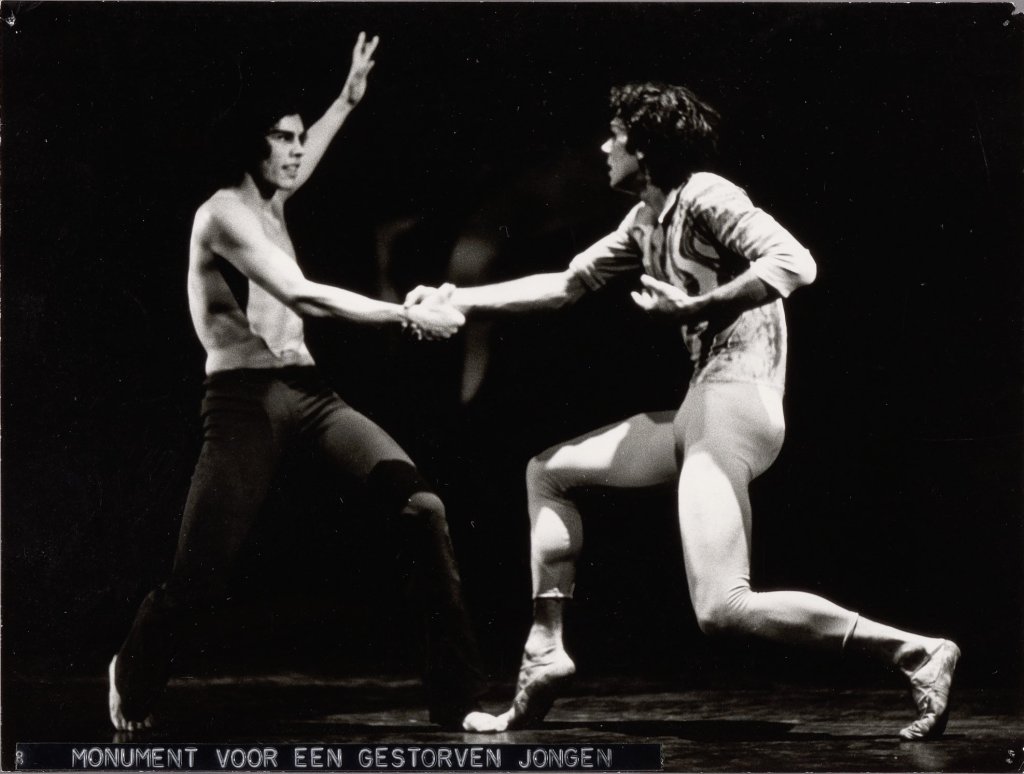
Rob van Woerkom and Toer van Schayk in Monument for a Dead Boy – photograph Jorge Fatauros
Toer van Schayk and Olga de Haas in Romeo and Julia – 1969-1970 – photograph Ger J. van Leeuwen
Rudi van Dantzig, whether in his private life or in his artistry, was a champion of equality and tolerance. His Romeo and Juliet, similar to Cranko and MacMillan, tells the tale of two youthful lovers, but he intentionally situates the ballet within a framework of his own social ideals. Juliet’s family, the Capulets, are portrayed as domineering and haughty. The Montagues, on the other hand, share a stronger bond with the residents of Verona. Van Dantzig also dismisses the familiar clichés. His figures are never merely good or bad. Take Tybalt for example. Van Dantzig depicts him as the aggressive cousin, but he is also seen playfully fencing with a young boy.
In a 1992 interview, Van Dantzig explained that he considers Romeo and Juliet a tale that defies the boundaries of time. The people, he continues, are the victims of the timeless conflict that occurs between rival groups for power and wealth. His Romeo and Juliet is a tragedy of two young people who, through hate, greed, envy, and power, fall victim to their inevitable fate. Nevertheless, Van Dantzig offers a spark of hope. The deaths of Romeo and Juliet are not in vain. In the final scene, the grief-stricken yet enlightened Signor Montague and Signor Capulet approach each other. The ballet ends with the fathers exchanging handshakes.
Toer Van Schayk, sharing Van Dantzig’s idealism, created costumes that enhance the choreographer’s social vision. The families and social classes are represented by specific fabrics and distinct colours. Van Schayk selects red hues for the Capulet family. Their heavy and stately costumes suit their aristocratic status. In contrast, the more benevolent Montagues wear blue-tinted attire. The townsfolk are modestly dressed. Their garments, in a variety of beige and light brown shades, are made with lighter fabrics.
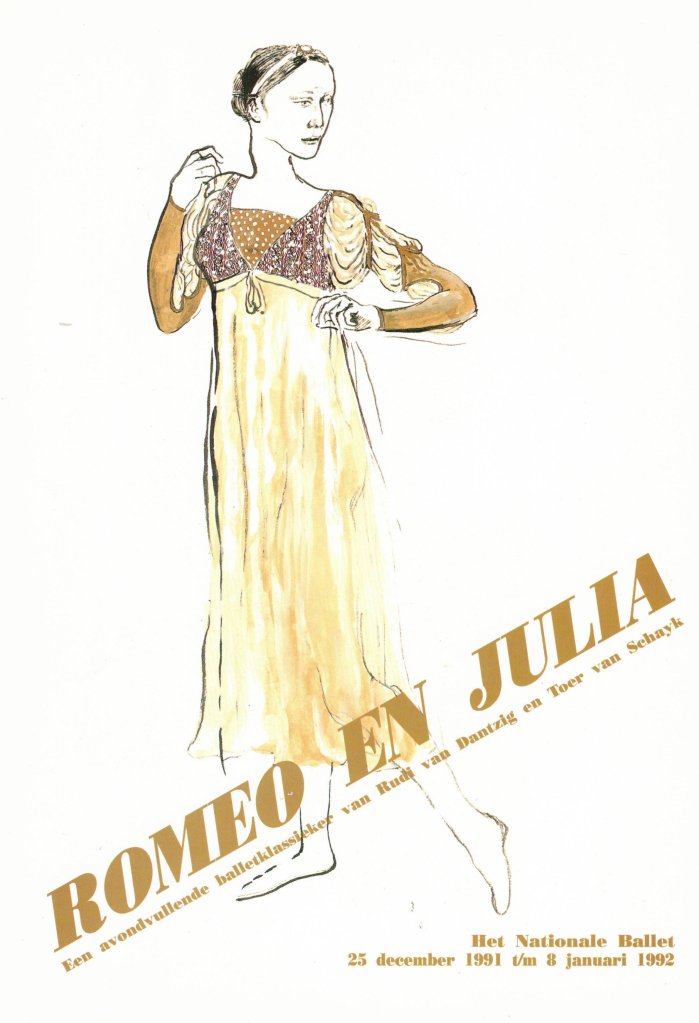
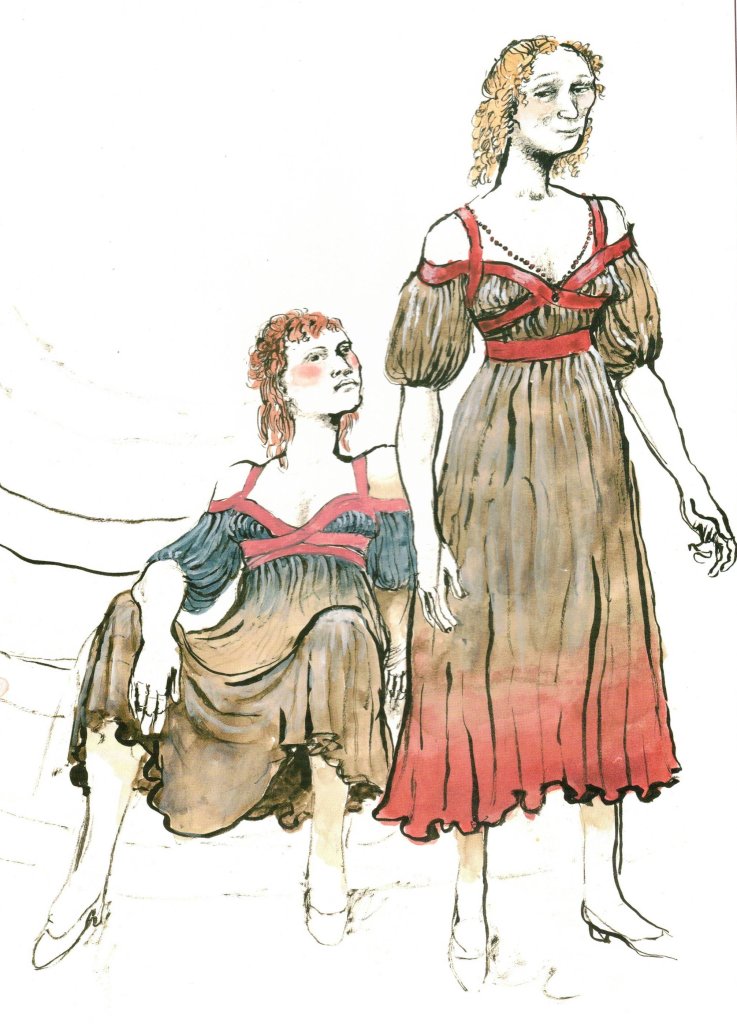
Left: costume design for Juliet and right for two harlots
Van Dantzig’s Romeo and Juliet has a permanent place in the repertoire of the Dutch National Ballet. Throughout the years, the ballet has undergone revisions. The latest production took place in November 2025. Toer van Schayk has designed and supervised the costumes and sets for each of these productions. He is demanding and has an incredible eye for detail. Ballerina Jane Lord, an astonishing Juliet, recollects that van Schayk even adorned the interior of the canopy of Juliet’s bed; the blue ceiling featured golden stars as decorations. No one in the audience could possibly see the ceiling of the flat-roofed canopy: ‘Toer’, however, wanted the dancers to fully immerse themselves in their roles and not be distracted by a roughly painted wooden frame with written stage directions.
Dancers of the Dutch National Ballet point out that ‘Toer’ manages every element of the mise-en-scène. He not only designs the costumes and sets but is often spotted in the workshop personally painting the scenery and requisites. He is also known to appear on stage, with paint and brush in hand, to apply finishing touches—shadows and accents—right before the premiere. The photograph below presents such a specific moment. Van Schayk, a sculptor in his own right, is shown retouching a monumental statue. This expressive angel, originally designed for the 1967 production, stands prominently in the Capulet tomb.
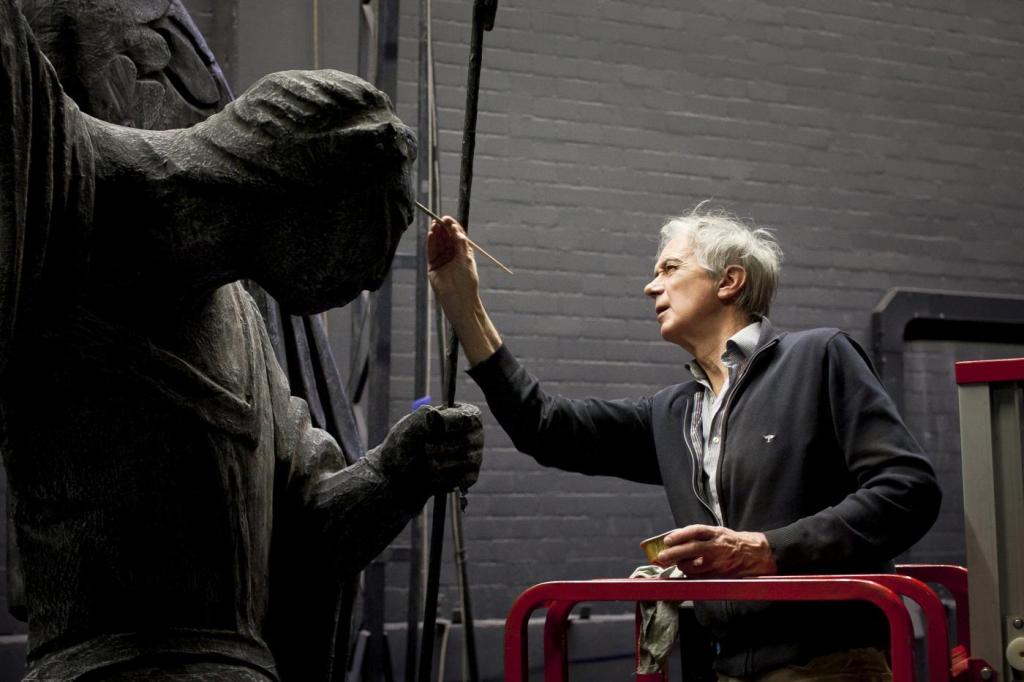

Stage design Romeo and Juliet – The Tomb of the Capulets – Dutch National Ballet – 1967 production
In 1967, two extraordinary artists—a visionary choreographer and a compelling visual artist whose many talents included dancing—embraced the challenge of producing the first Dutch full-length classical ballet. Could Rudi van Dantzig and Toer van Schayk have envisioned that, nearly sixty years after the premiere, their remarkable work would become a cornerstone in the repertoire of the Dutch National Ballet?
(1) For reference, Frederick Ashton choreographed the ballet Romeo and Juliet before the sensational premiere of Lavrovsky’s version in London in 1956. Ashton, unlike Cranko, MacMillan, or Van Dantzig, was not influenced by Lavrovsky. Ashton choreographed the ballet to Prokofiev’s music for the Royal Danish Ballet in 1955. The Royal Ballet never performed Ashton’s version.
(2) John Cranko, Kenneth MacMillan, and Rudi van Dantzig were among the first choreographers in the West to choreograph a full-length Romeo and Juliet. Since then many choreographers have followed suit. Some versions are embedded in the classical tradition; other choreographers have taken a more contemporary approach. The ballet Romeo and Juliet is universal and everlasting.
(3) The original title of the Van Dantzig/Van Schayk production was Romeo en Guilietta. This was later changed to Romeo en Julia. This title is always in use when the ballet is performed in the Netherlands. I have chosen to always refer to the ballet by its English title, Romeo and Juliet.


 DANCE IMAGES IN THE ART OF THE NETHERLANDS