-

Hieronymus Janssens, a.k.a. The Dancer
I concluded the previous post by introducing Hieronymus Janssens, a distinguished Flemish artist who was active during the second half of the 17th century. Janssens, a Baroque artist, exclusively painted the affluent, displaying elegant society in opulent settings. Dance and refined manners are a central feature in his paintings. While numerous artists featured dance scenes… Read more
-

Dance & Opulence:Two early 17th c. Flemish Artists
When considering 16th- and 17th-century art of the Low Countries, images of village scenes, tavern scenes, and unrefined characters may spring to mind. You might envision artworks by Pieter Bruegel the Elder, Jan Steen, Adriaen Brouwer, and Adriaen van Ostade, who all created memorable pieces depicting dancing rustics and everyday life. I wonder, however, if… Read more
-

David Vinckboons – a Flemish Artist in Amsterdam
David Vinckboons (1576–c.1632) was born in Mechelen, a prosperous city in the Southern Netherlands. He moved to Antwerp as a young boy. Soon after, the ramifications of the Spanish occupation led the Vinckboons family to relocate to the Northern Netherlands. They eventually settled in Amsterdam. Vinckboons’ father and grandfather were professional artists and designers, and… Read more
-

And Jephthah’s Daughter Danced
There is a nameless young girl in the Old Testament whose joyful dancing results in an unimaginable tragedy. I am, of course, referring to the daughter of Jephthah. Jephthah’s story is related in the Book of Judges. The tale is intricate but fundamentally involves the mighty warrior, Jephthah, who, just before going to war against… Read more
-

More Elegant Dancers in Palatial Gardens
An anonymous 15th-century Flemish artist painted an intriguing painting showing elegant Burgundian nobles socialising in a splendid garden. The painting, Jardin d’amour à la cour Phillippe III le Bon, is shrouded in mystery. The original work has been lost. There are, however, two reproductions. Neither reproduction has been attributed to a specific artist. Scholars are… Read more
-

Elegant Dancers in Palatial Gardens
In the 16th and 17th centuries, genre paintings featuring dancing peasants were enormously popular in the Low Countries. The Peasant Dance and The Wedding Dance by Pieter Bruegel the Elder are iconic. Artworks depicting the dancing elite, nonetheless, were equally in demand. Dutch and Flemish artists depicted elegant couples dancing in courtyards, banquet halls, and… Read more
14th century 15th century 16th century 17th century 18th century 19th century 20th century 21st century Adriaen Brouwer Adriaen Pietersz. van de Venne Adriaen van Ostade Albrecht Dürer Alma-Tadema art Arthurian Legends Bal des Ardents ballet Bergen School Bernard Picart Burgundian Court CoBrA Constant Cornelis Dusart Cornelis Massijs court dancing Crispijn de Passe the Elder dance Dance/Dancers Dance around the Golden Calf dancers David Ryckaert III David Teniers the Younger David Vinckboons De Stijl Egg dance Else Berg Erhard Schön Flemish Art Frans Francken II Frans Huysmans George Hendrik Breitner Gertrud Leistikow Gillis Mostaert Hans Bol Harmen Meurs Henri Braakensiek Herman Bieling Hieronymus Bosch Hieronymus Francken the Younger Hieronymus Janssens illuminated manuscript Isaac Israels Isaac van Ostade Jacob Grimmer Jacob Savery I Jacobus van Looy Jan Brueghel the Elder Jan Mandijn & followers Jan Miense Molenaer Jan Sierhuis Jan Sluijters Jan Steen Jean-Baptiste Vanmour Jean de Wavrin Jean Froissart Johan Dijkstra Karel Appel Karel van Mander Kees Maks Kees van Dongen Leo Gestel Loyset Liédet Lucas van Valckenborch Maarten van Heemskerck Maastricht Hours Maerten de Vos Marius Bauer Marten van Cleve Mommie Schwarz Pieter Aertsen Pieter Balten/Peeter Baltens Pieter Bruegel the Elder Pieter Brueghel the Younger Pieter Codde Pieter van der Borcht Pieter van der Heyden Piet Mondrian Piet van der Hem Romance of Alexander Roman de la Rose Rothschild Canticles Salome Sebald Beham Simon Bening Stallman Pim Tango Theo van Doesburg Vincent van Gogh Willem de Zwart Willy Sluiter
About me
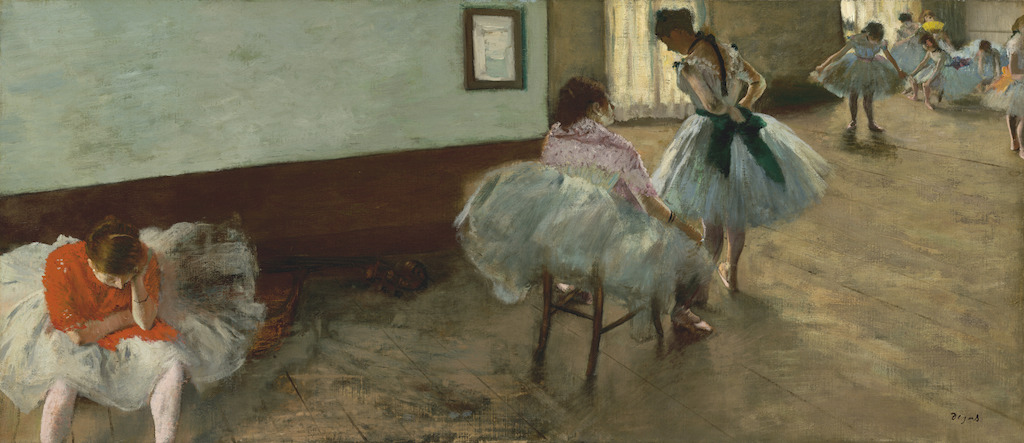
As a young aspiring dancer I loved to ponder over the magnificent paintings created by Edgar Degas. How his ballerinas inspired me. The atmosphere of the Paris Opera, the beautiful tutus and the hard working dancers never failed to trigger my imagination. As the years past, I retained my love of dance, of Degas, of art, and developed an interest in knowing more about the cross fertilization between art and dance.